Beyond audience size: what makes audience revenue sustainable for independent media
Press Releases
Shrinking advertising markets and declining grant funding have pushed audience revenue to the centre of independent media’s sustainability strategies. Memberships, subscriptions, donations, and events are no longer side experiments. Yet most of what we know about audience revenue comes from mature subscription markets in North America and Europe, or from a handful of high-profile success stories. Far less is known about how it works in fragile, polarised, or resource-constrained environments, where trust, purchasing power, and payment culture shape outcomes as much as pricing or product decisions.
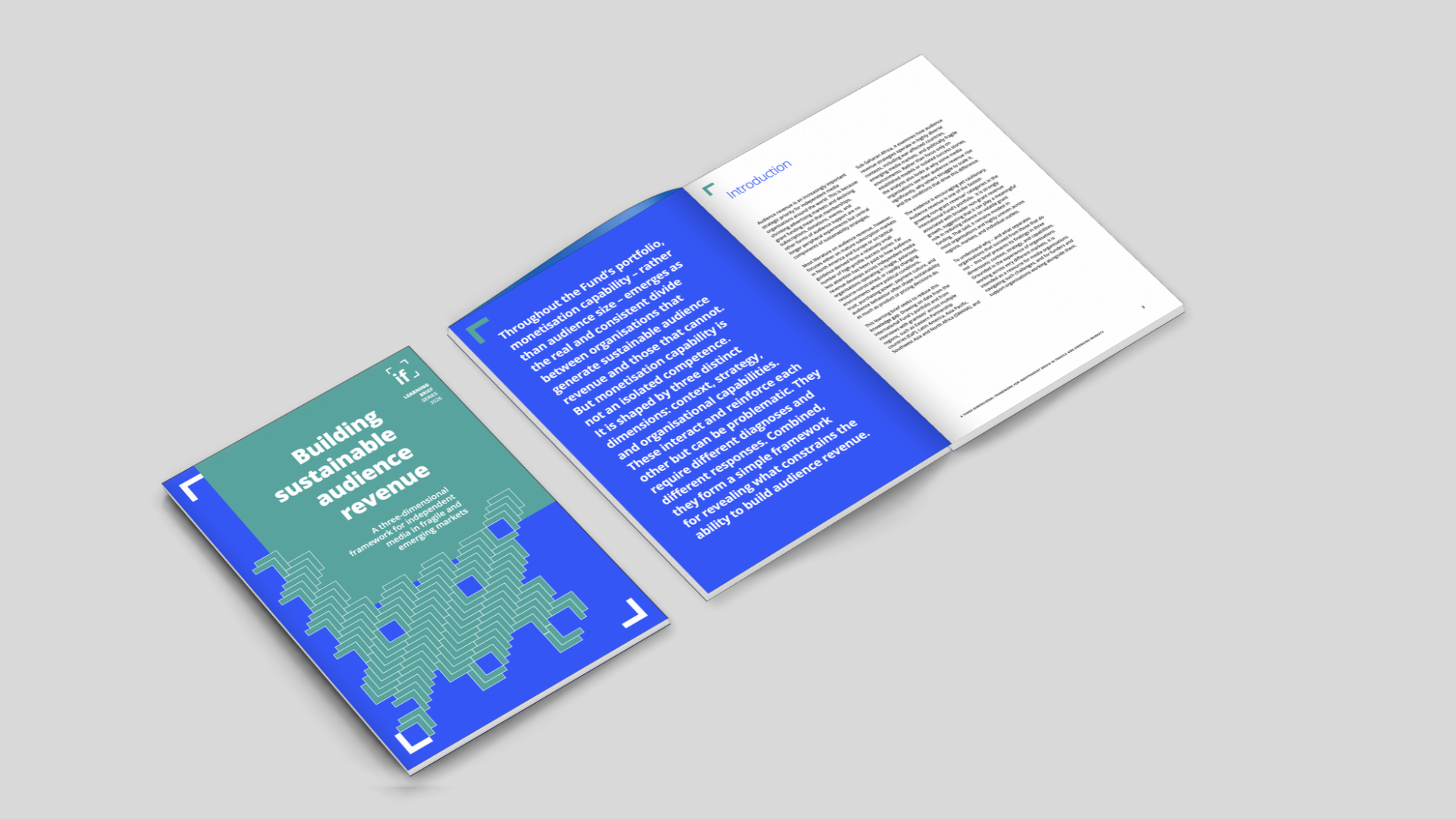
The new learning brief from the International Fund for Public Interest Media (IFPIM), Building sustainable audience revenue, helps fill that gap. Drawing on data from IFPIM’s portfolio and interviews with grantees in the Eastern Partnership countries, Latin America, Asia Pacific, Southwest Asia and North Africa (SWANA), and Sub-Saharan Africa, this analysis examines why some media organisations manage to significantly increase their audience-generated revenue, while others struggle to do so.
The evidence is encouraging but cautionary. Among grantees already generating audience revenue, it grew by 228% between 2024 and 2025, making it the fastest-growing non-grant revenue category in the portfolio, and its growth is strongly correlated with growth in overall non-grant income. Yet it still accounts for just 6% of these grantees’ total income on average. Adoption also varies sharply by region: 90% of Eastern Partnership grantees generate audience revenue, compared with 79% in Latin America, 55% in Asia Pacific, 28% in SWANA, and none in Sub-Saharan Africa (unless events are counted).
Audience growth creates potential. Monetisation capabilities turn that potential into revenue. Trust and lasting relationships make it sustainable.
The brief’s central finding is that the real divide is not audience size but monetisation capability: the ability to convert and retain an existing audience. Across the portfolio, there is effectively no correlation between growth in web users and growth in non-grant revenue. The Intercept Brasil earns close to 80% of its revenue from membership without being dramatically larger than weaker performers. Tempo in Indonesia, by contrast, has a much larger audience and won 50,000 subscribers in its first campaign, but retains only around 30% of them. Audience growth matters most once an outlet can convert and retain the people it already reaches.
What people support, in the end, is often more than content. As Artem Ipatov, CEO of Ukraine’s ShoTam, puts it: “The main reason people want to help media outlets is the values they share. Independent journalism is just the way to share those values.”
To explain these differences, the brief proposes a simple diagnostic framework built on three dimensions: context (the structural conditions that make audience revenue viable), strategy (the choices organisations make within those conditions), and capabilities (what they can execute and sustain). It sets out six insights: the first on context, the next three on strategy, and the final two on capabilities.
1. Context shapes audience revenue, but it is not destiny. Purchasing power, payment infrastructure, trust, and diaspora ties set the starting conditions, yet outlets in similar markets often perform very differently.
2. Audience revenue is about relationships, not just access to content. People support values, identity, mission, and community. Where that relational layer is missing, even well-designed subscription models become fragile.
3. Sustainable revenue depends on a distinct value proposition. The strongest performers offer something hard to commoditise: investigative journalism, niche expertise, local identity, or professional utility.
4. Acquisition creates audiences; participation retains them. The strongest retention comes from community and belonging, not from discounts or volume-driven acquisition.
5. Organisational capability is more important than audience size. Outlets that grow audiences without learning to convert them do not turn that growth into revenue.
6. Good journalism alone is not enough. Sustainable audience revenue requires the whole organisation, with editorial, product, audience, and revenue functions aligned around a shared model.
The brief also turns the framework into practical guidance, helping media organisations, funders, and support organisations identify whether their main constraint is one of context, strategy, or capabilities. Each calls for a different response, and confusing them is one of the most frequent mistakes in the field. Ultimately, sustainable audience revenue is less about finding the “right” mechanism than about building an organisation capable of developing and maintaining valuable relationships with its audiences.
Download the full learning brief: Building sustainable audience revenue
About the learning brief series
This learning brief is part of a series produced by the International Fund's What Works Unit, which documents and analyses the experience of independent media in low- and middle-income countries to understand what works and what does not in responding to the political and structural market challenges facing public interest journalism.
Previous learning briefs
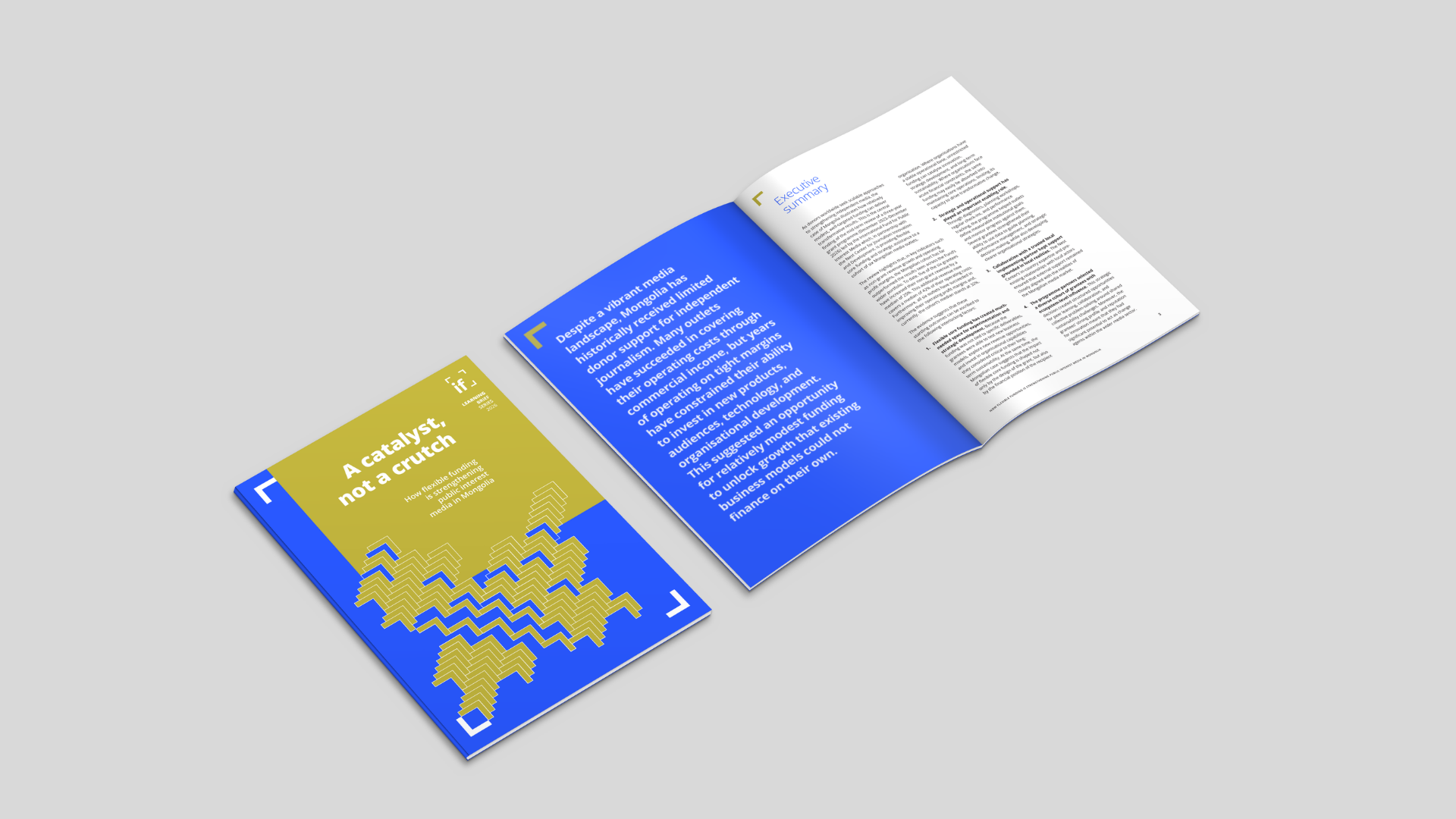
A catalyst, not a crutch (Mongolia)
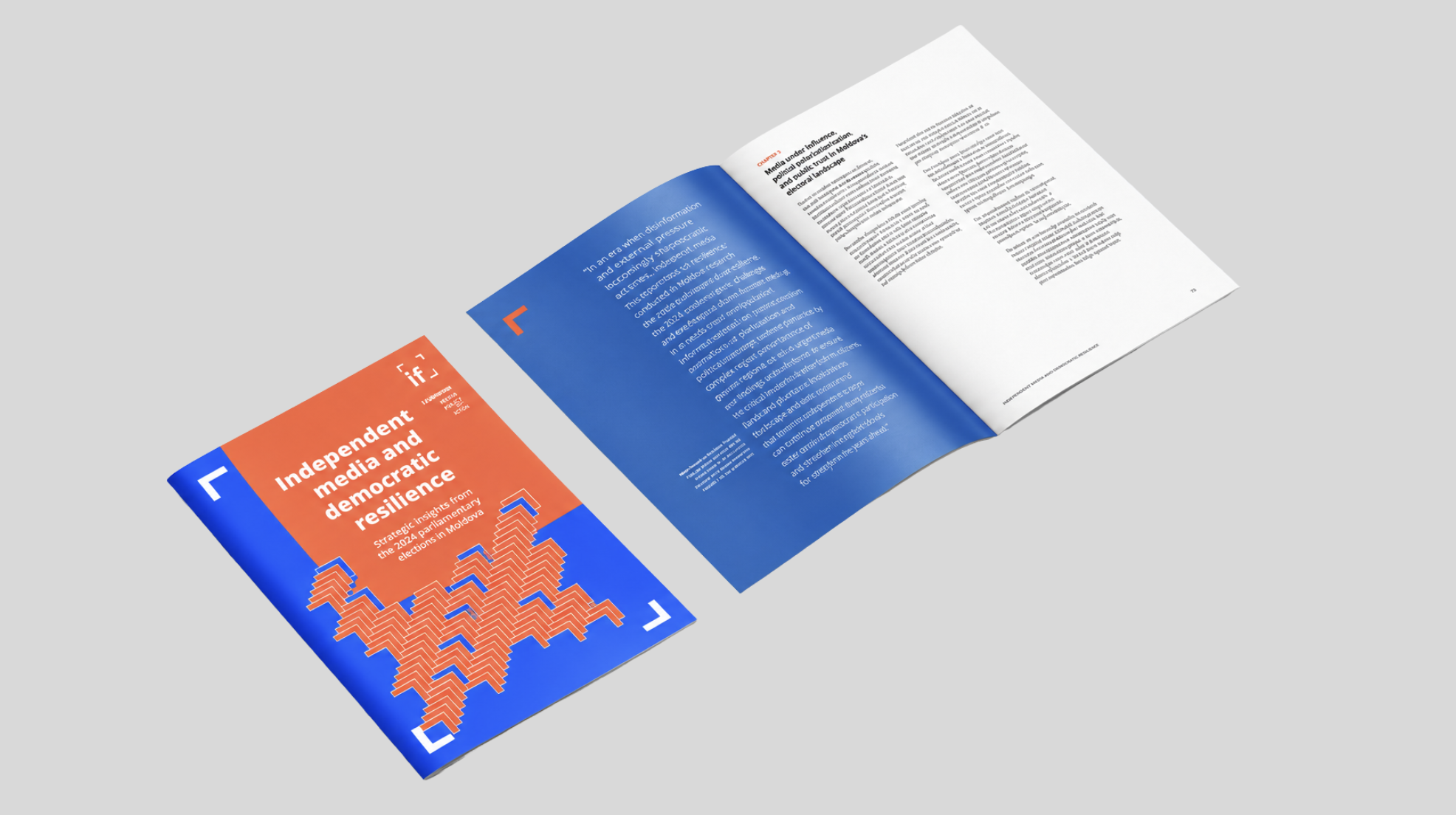
Independent media and democratic resilience (Moldova)